Tips for finding fish under the ice
Even the perfect lure will not help if there are no fish below you. These tips explain how to read a virtual lake and choose better spots.
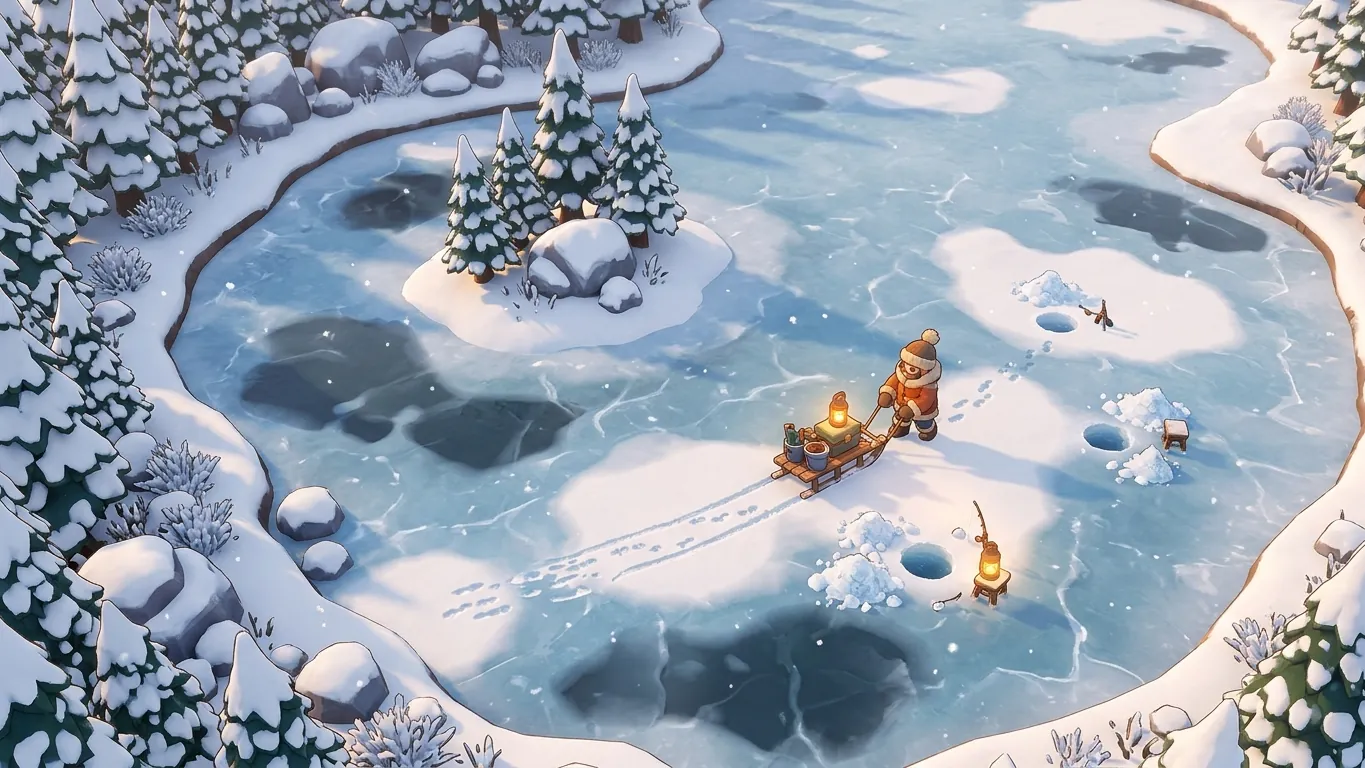
Location comes first
In most ice fishing games, where you fish matters more than anything else. Fish are rarely spread evenly across a lake. Developers often place them according to depth, cover, bottom type and time of day, mimicking how real fish gather in certain areas during winter.
That means a few minutes spent studying the lake can save a lot of waiting. Before drilling your first hole, look at whatever information the game offers: a depth map, a mini overview of the lake, visual clues on the shoreline or notes about where species tend to live.
Look for structure and transitions
Structure refers to changes in the lake bottom: drop-offs, underwater points, humps, channels and weed beds. In many games, fish are modeled to hold near these features because they offer food and shelter. A flat, featureless area in the middle of the lake is often less productive than the edge where shallow water drops into deeper water.
Transitions are especially worth exploring. The line where weeds end, where a soft bottom turns rocky, or where a shallow flat meets a deep basin can attract several species. If your game includes a depth map, look for tightly grouped contour lines, which usually indicate a steep drop-off.
Shorelines can offer clues too. A rocky point above the ice often continues under the water. A bay surrounded by reeds may hide weed beds below. Games frequently use these visual hints to help observant players.
A simple hole-hopping method
Moving efficiently between spots is one of the most useful habits in ice fishing games.
- 01
Pick a target area
Choose a feature such as a drop-off or weed edge to explore.
- 02
Drill several holes
Space them across different depths along the feature, if your game allows it.
- 03
Fish each hole briefly
Spend a short, consistent amount of time in each hole, watching for marks or bites.
- 04
Note what works
Remember the depth and position where you had activity.
- 05
Focus or move on
Stay where fish respond. If nothing happens, try a new area.
Think about depth and time
Many games simulate fish moving between depths over the course of a day. Some species may be modeled to move shallower during low light, at dawn and dusk, and deeper during bright midday hours. Others may stay near the bottom most of the time. Your game's species information, if available, is the best guide.
If you find fish at a certain depth in one spot, try the same depth elsewhere on the lake. Patterns often repeat. If activity fades, consider whether the time of day has changed and the fish may have moved.
Stay flexible
The most common reason for a slow session is staying too long in an unproductive spot. It feels natural to wait for fish to arrive, and sometimes they do, but moving is often a better use of your time. Treat each hole as a test that gives you information, even when it produces nothing.
At the same time, avoid moving so often that you never give a spot a fair chance. Find a balance that fits your game's pace. With practice, you will develop a sense of when a location deserves patience and when it is time to pack up the sled and explore.
Related articles
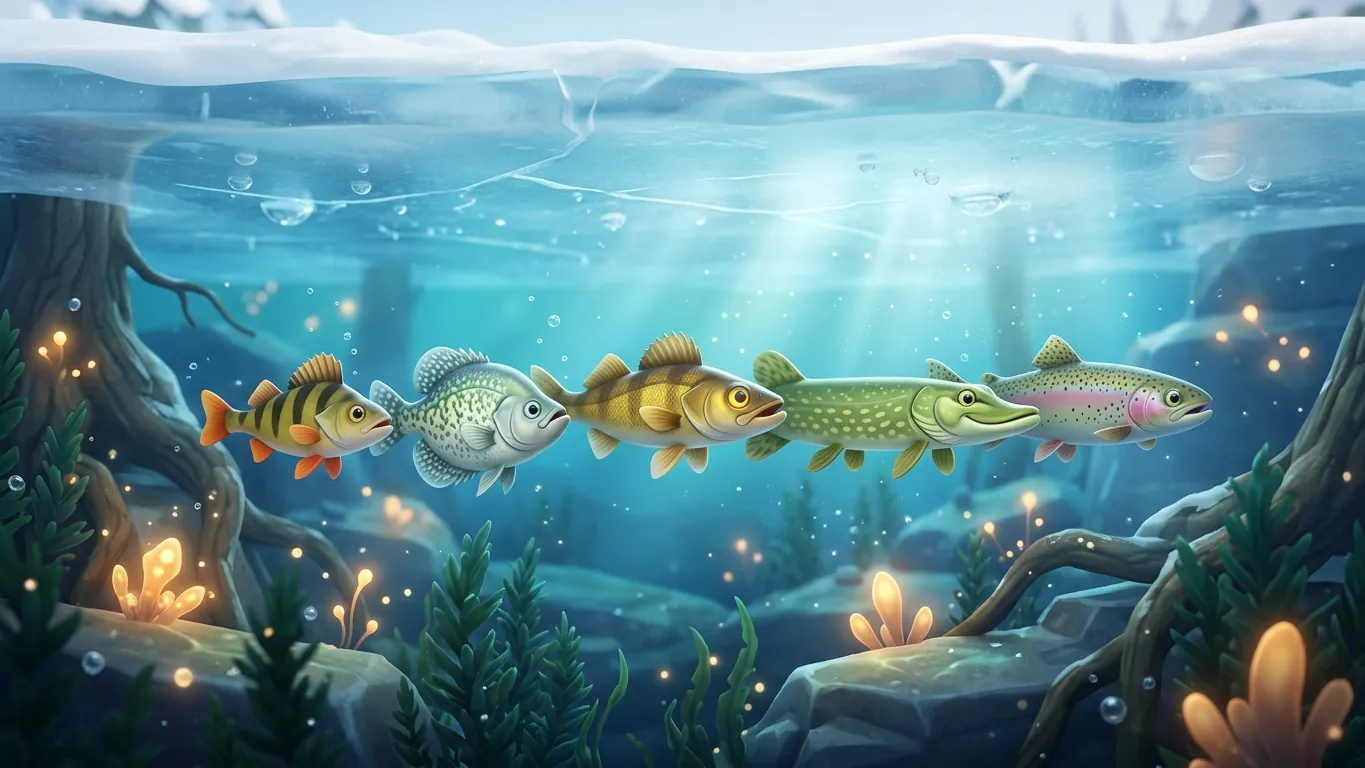 Common winter fish species in fishing games
An overview of cold-water fish often featured in ice fishing games, including perch, crappie, walleye, pike and trout, and how games tend to model them.
Read more
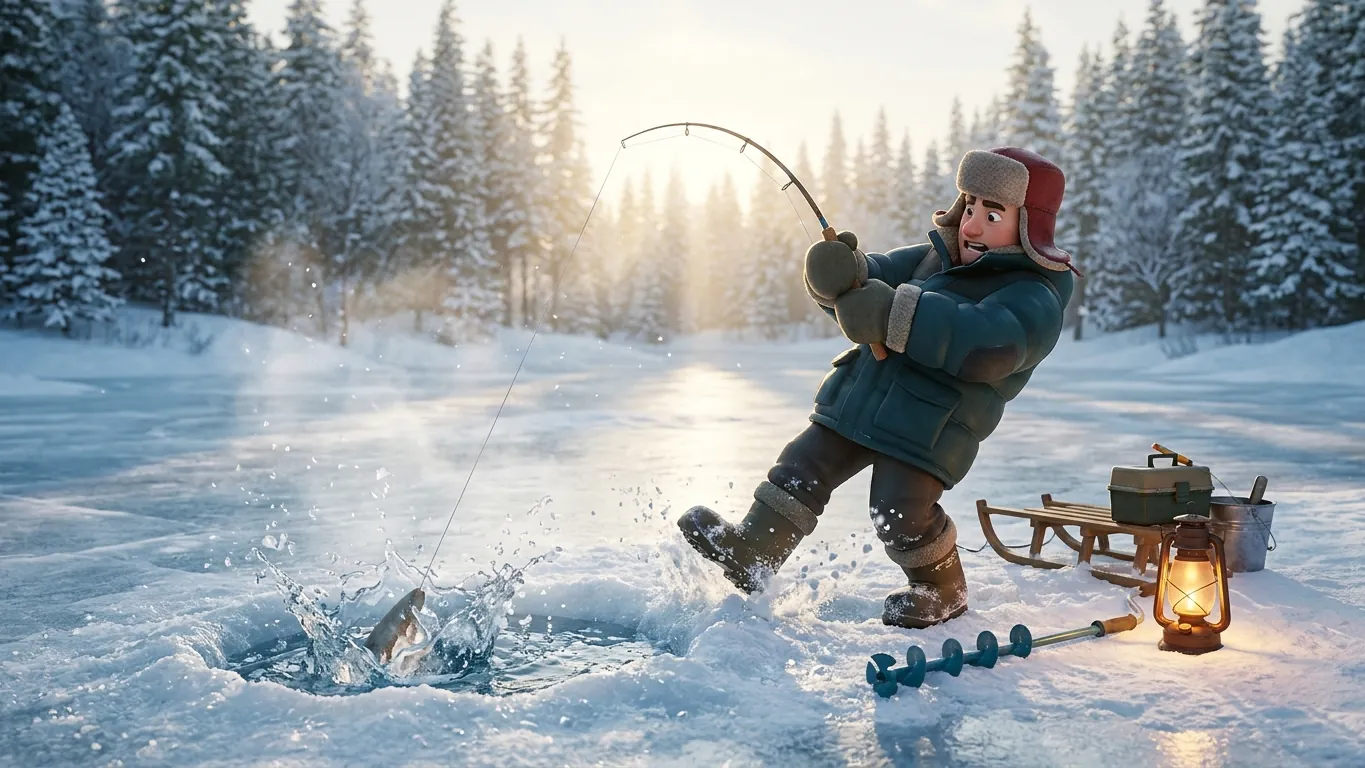 Hook sets and line tension in ice fishing games
Learn how hook sets, drag and line tension usually work in ice fishing games, and get practical tips to land more fish and break fewer lines.
Read more
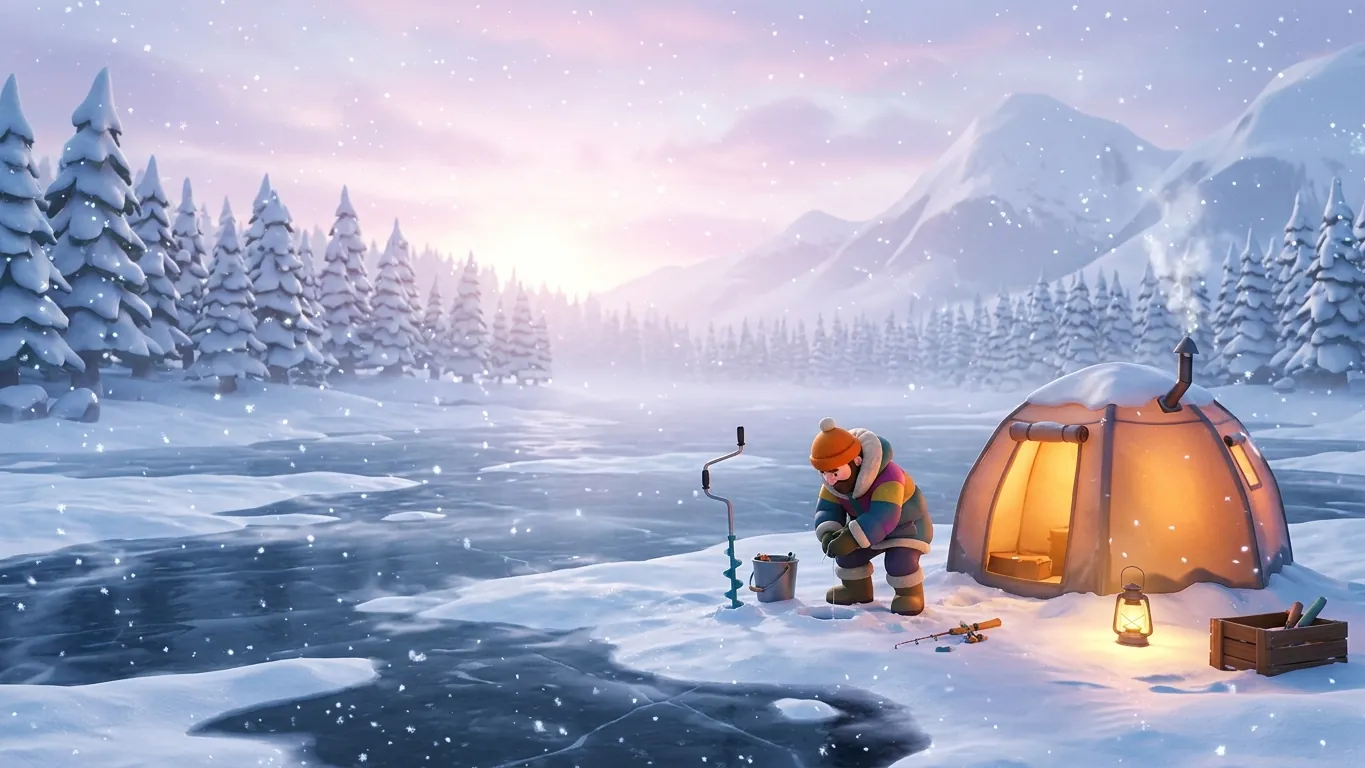 Planning around time and weather in winter fishing games
How in-game time of day, light, snow and wind can shape your session in winter fishing games, with tips for planning around changing conditions.
Read more