Hook sets and line tension in ice fishing games
Getting a bite is only half the battle. This article explains how games usually handle hook sets and line tension, and how to bring more fish up through the hole.
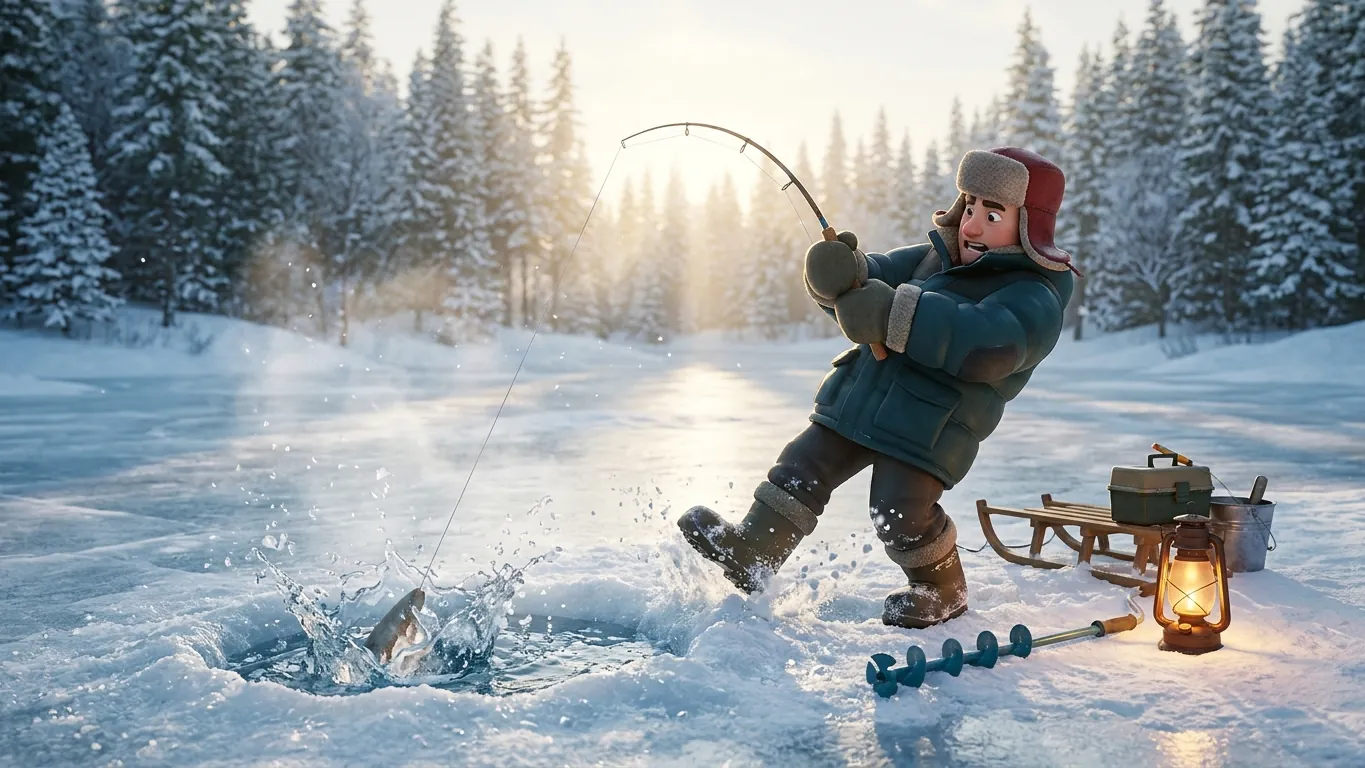
Why the fight matters
Many ice fishing games turn the moment after a bite into a small skill challenge. You need to set the hook at the right time, then manage tension so the line does not break and the hook does not pull free. Mechanics differ between titles. Some use a tension meter, others rely on rod bend, sound cues or controller vibration. The core idea, however, is usually the same: too little pressure and the fish escapes, too much and something snaps.
Understanding these systems can make a big difference, especially when larger fish come into play.
Timing the hook set
The hook set is the quick upward movement that drives the hook into the fish's mouth. In games, this is usually a single button press or a sharp stick movement. Timing matters. React too early, while a fish is only nibbling, and you may pull the bait away. React too late, and the fish may spit the lure.
Watch for the signal your game uses to indicate a committed bite. That may be a strong rod dip, a bobber pulled fully under, a distinct sound or a sonar mark merging with your lure. Practice on smaller, plentiful species first. Repeated attempts help you learn the rhythm of your game without the frustration of losing a rare fish.
Understanding drag and tension
Drag is the setting on a reel that lets line slip out when a fish pulls hard. In games that model it, a looser drag reduces the chance of breaking your line but makes reeling slower. A tighter drag gives you more control but increases the risk of a break during a strong run.
Tension is the overall pressure on the line. Many games display it as a meter or color. When tension climbs toward the danger zone, ease off: stop reeling, lower the rod slightly or let the fish run. When tension drops, reel steadily to gain line. The fight becomes a back-and-forth rhythm rather than a race to reel as fast as possible.
A calm approach to landing fish
This general sequence works in many ice fishing games.
- 01
Wait for a clear bite
Let the fish commit before reacting.
- 02
Set the hook firmly
Use one decisive motion rather than repeated taps.
- 03
Watch the tension
Keep an eye on the meter, rod bend or other cues.
- 04
Give line during runs
Pause reeling when the fish pulls hard.
- 05
Reel during pauses
Gain line steadily when tension relaxes.
- 06
Guide it through the hole
Many games add a final step to lift the fish through the ice carefully.
Choosing gear for the fight
Your rod and line choice affects how fights play out. Light lines may draw more bites in some games but break more easily. Heavier lines resist breaks but may reduce bites from wary fish. Rods with more flex can absorb sudden movements, while stiffer rods often give stronger hook sets.
Match your gear to the target. Light setups are often fine for panfish, while larger predators may require stronger lines and rods. If you keep losing fish at the same moment, look at whether your gear, drag setting or timing could be adjusted. Small changes often solve recurring problems.
Related articles
 Planning around time and weather in winter fishing games
How in-game time of day, light, snow and wind can shape your session in winter fishing games, with tips for planning around changing conditions.
Read more
 Why winter fishing games feel so relaxing
An opinion piece on why quiet winter fishing games appeal to many players: slow pacing, calm atmosphere, small goals and the satisfaction of patience.
Read more
 Ice fishing games: a beginner's guide
New to ice fishing games? Learn the core gameplay loop, from choosing a lake and drilling holes to rigging a line and landing your first virtual fish.
Read more