Check the clock
Note the in-game time when you start and plan moves around low-light windows.
Many winter fishing games simulate changing light and weather. This guide explains how these conditions may affect fish and how to plan your sessions around them.
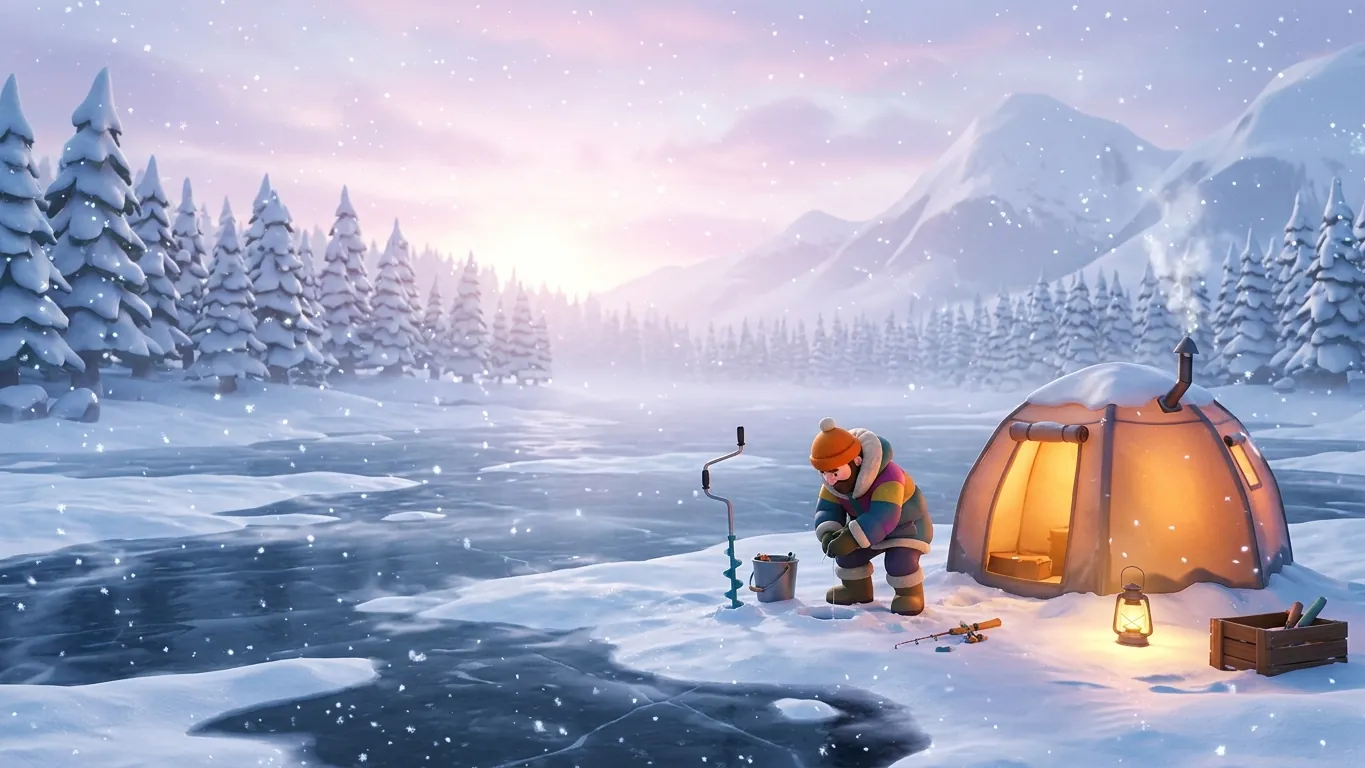
Some winter fishing games keep conditions fixed, but many include a day and night cycle, shifting weather and seasonal details. These systems add atmosphere, and in many titles they also influence fish behavior. Learning how your game uses them can help you plan sessions more effectively and enjoy the changing scenery.
The ideas in this article describe patterns common in the genre. Developers make their own choices, so treat these as starting points and observe how your chosen game responds.
Time of day is often the most important condition in fishing games. Many titles model certain species as more active during low light, around dawn and dusk. During these periods, fish may move into shallower water or rise in the water column to feed. Midday may bring slower activity or fish holding deeper.
Night fishing is sometimes available as well. It can feel very different, with lanterns, starlit skies and species that are modeled as more active after dark. If your game allows you to skip or advance time, consider planning sessions so you are on a productive spot when the light changes, rather than arriving after the busiest window has passed.
Weather systems in winter fishing games may include clear skies, cloud cover, snowfall and wind. In many games, overcast conditions are treated a bit like extended low light, which may keep fish active longer during the day. Bright, clear conditions may push some species deeper or make them more cautious.
Some games also tie weather to practical challenges. Strong wind or heavy snow may reduce visibility or make it harder to move around the lake. A heated shelter can make these conditions more comfortable in games that track warmth or stamina. Whether weather affects gameplay or only atmosphere depends entirely on the title, so watch how bites change when the weather shifts.
These simple habits help many players get more out of changing conditions.
Note the in-game time when you start and plan moves around low-light windows.
Observe whether clouds, snow or sun seem to change fish activity in your game.
Choose a second location in case conditions slow down your first choice.
When light changes, try moving your lure up or down to follow the fish.
Record which times and conditions produced results for each species.
Even when weather does not help the bite, it can make a session memorable. Watching snow drift across a quiet lake or seeing the sky shift from gold to deep blue is part of why many people play winter fishing games. Some players even choose conditions purely for the mood.
The best approach combines both perspectives. Use time and weather to plan smarter sessions, but leave room to slow down and enjoy the world the developers have created.
 Why winter fishing games feel so relaxing
An opinion piece on why quiet winter fishing games appeal to many players: slow pacing, calm atmosphere, small goals and the satisfaction of patience.
Read more
 Ice fishing games: a beginner's guide
New to ice fishing games? Learn the core gameplay loop, from choosing a lake and drilling holes to rigging a line and landing your first virtual fish.
Read more
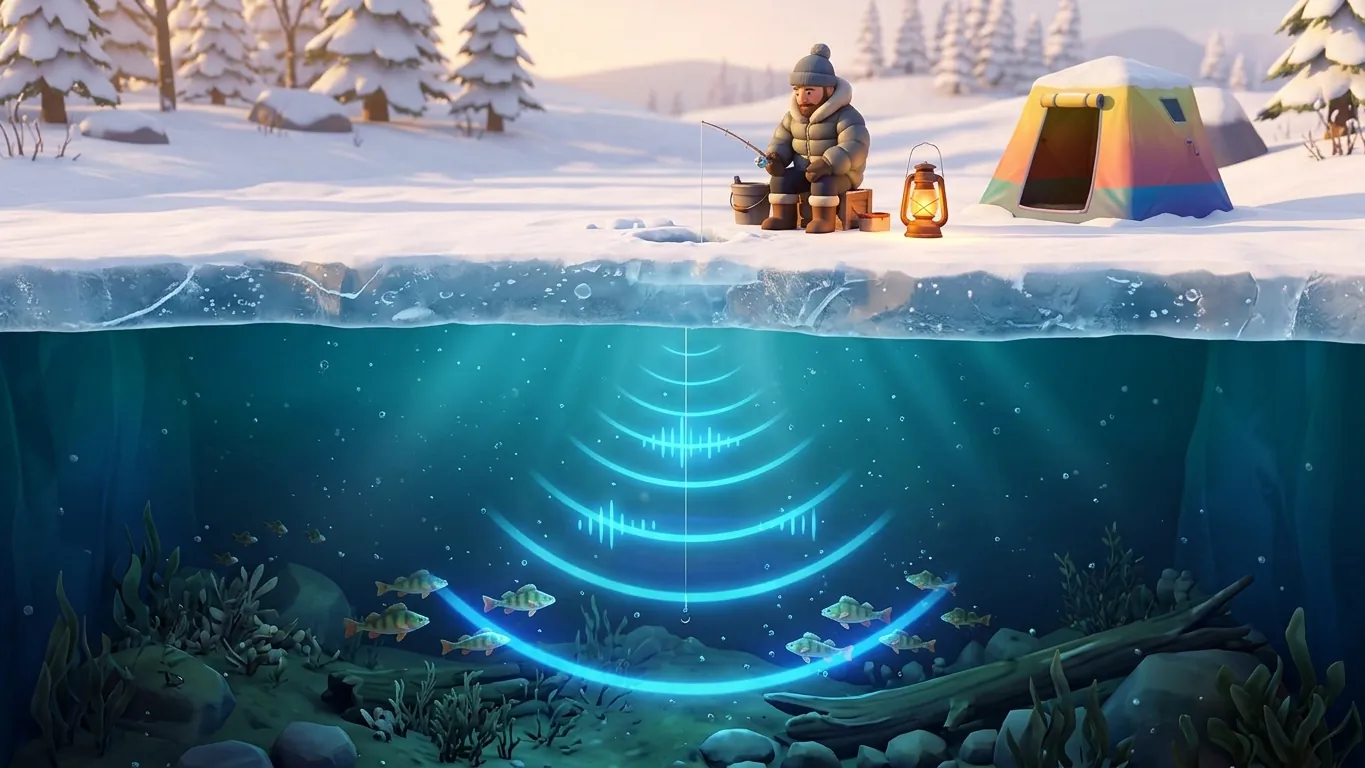 How to read sonar in ice fishing games
A clear explainer on sonar and fish finders in ice fishing games: what the display shows, how to spot fish and lure marks, and how to react to them.
Read more