Northern pike
Usually shown as large predators near weeds and shallow bays. Games often pair them with larger lures, baitfish and tip-ups, and model strong runs that test line strength.
Many ice fishing games feature a familiar cast of cold-water fish. Here is an overview of the species you are likely to meet and how games often portray their behavior.
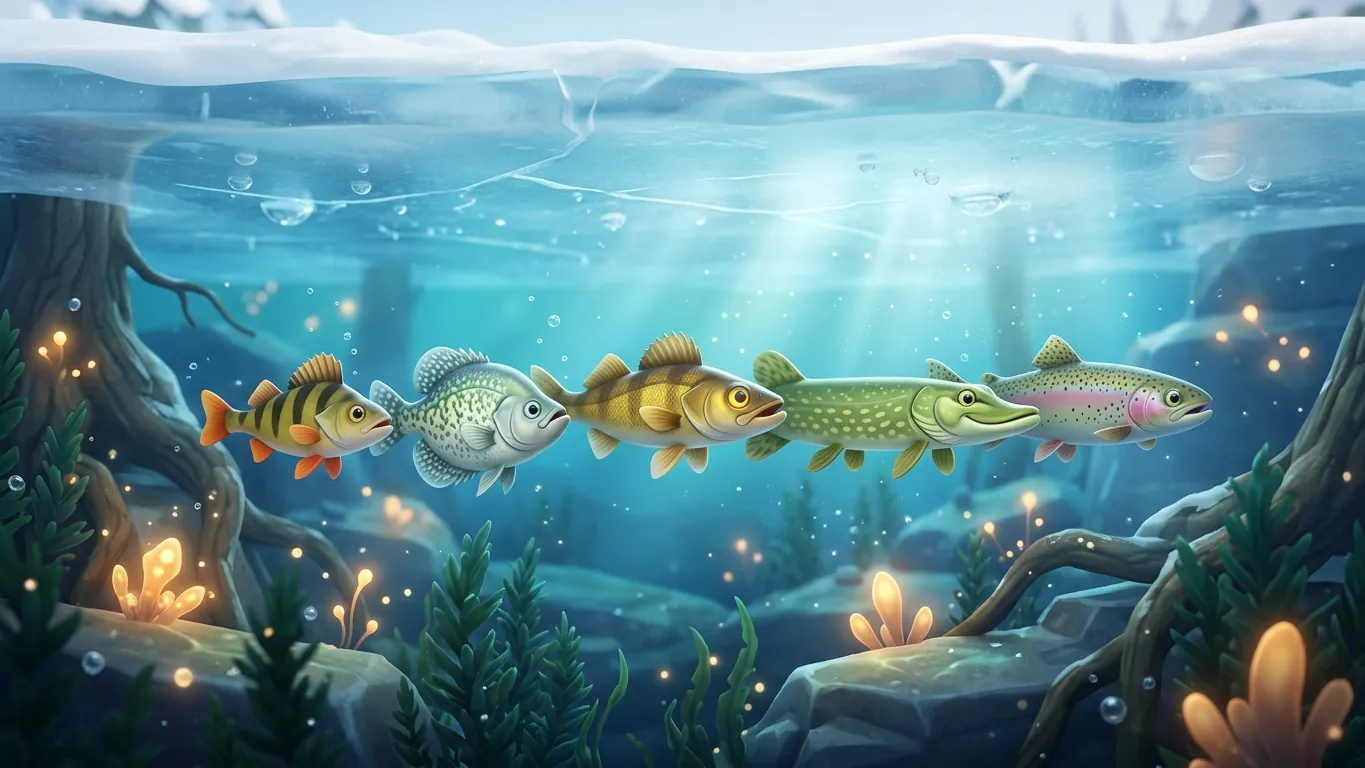
Fishing games often give each species its own preferences for depth, habitat, food and activity times. Learning these traits is one of the most satisfying parts of the genre. Instead of hoping for random bites, you begin to plan sessions around a target species, choosing the right lake, spot and lure.
The descriptions below reflect patterns commonly seen in games. They are loosely based on how these fish are described in nature, but each game adapts them in its own way. Always check your game's in-game information for the most accurate details.
Yellow perch are a staple of many ice fishing games. They are often portrayed as schooling fish that gather near the bottom or around weed edges. Because they move in groups, finding one perch frequently means more are nearby. Small jigs and natural bait are typical choices.
Bluegill and similar sunfish may also appear. They are usually modeled as small fish that prefer shallower weedy areas and respond to tiny, subtle presentations. Panfish are often a great starting point for beginners because they tend to be plentiful in game design and help you practice bite detection.
Crappie are frequently shown suspending in the water column rather than sitting on the bottom. This makes them a good species for practicing sonar reading and depth control. Games often make them more active during low light, around dawn and dusk.
Small jigs, soft plastics or minnow-style baits are common choices. If you see marks hovering at mid-depth, raising your lure to just above them is a classic approach in many titles.
Walleye are often portrayed as low-light feeders that move along drop-offs, rocky areas and transitions between shallow and deep water. In games that model time of day, they may be more active around sunrise and sunset.
Anglers in fishing games commonly target walleye with spoons, jigging lures or baitfish presented near the bottom. Because they can be selective, adjusting your jigging rhythm or switching between active and still presentations is often part of the challenge.
These species add variety and often a bigger challenge.
Usually shown as large predators near weeds and shallow bays. Games often pair them with larger lures, baitfish and tip-ups, and model strong runs that test line strength.
Commonly placed in deep, cold, clear water. They may roam widely and respond to active lures worked over considerable depth.
Rainbow or brook trout may appear in smaller lakes and streams, often near the surface or shallower areas, and respond to small lures or bait.
Some games include less common species that require specific depths or delicate presentations, adding goals for experienced players.
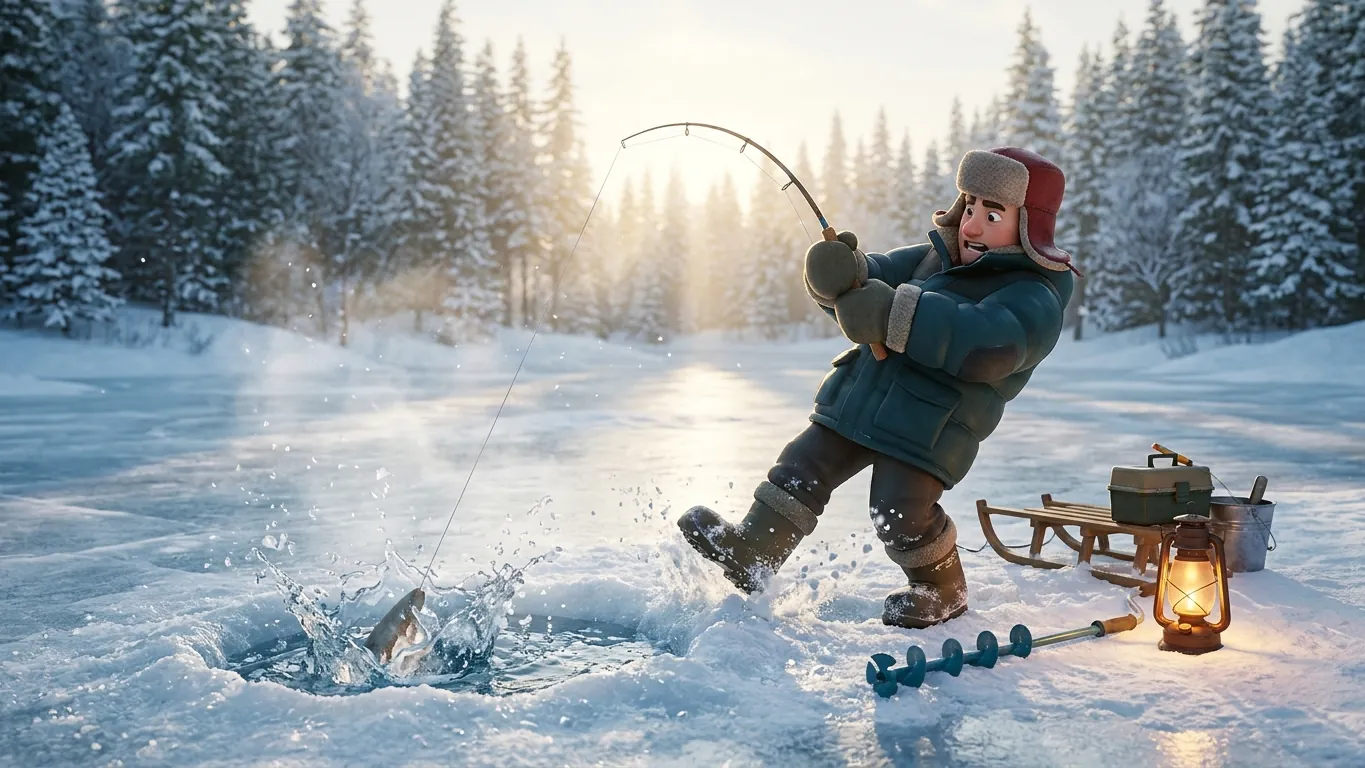 Hook sets and line tension in ice fishing games
Learn how hook sets, drag and line tension usually work in ice fishing games, and get practical tips to land more fish and break fewer lines.
Read more
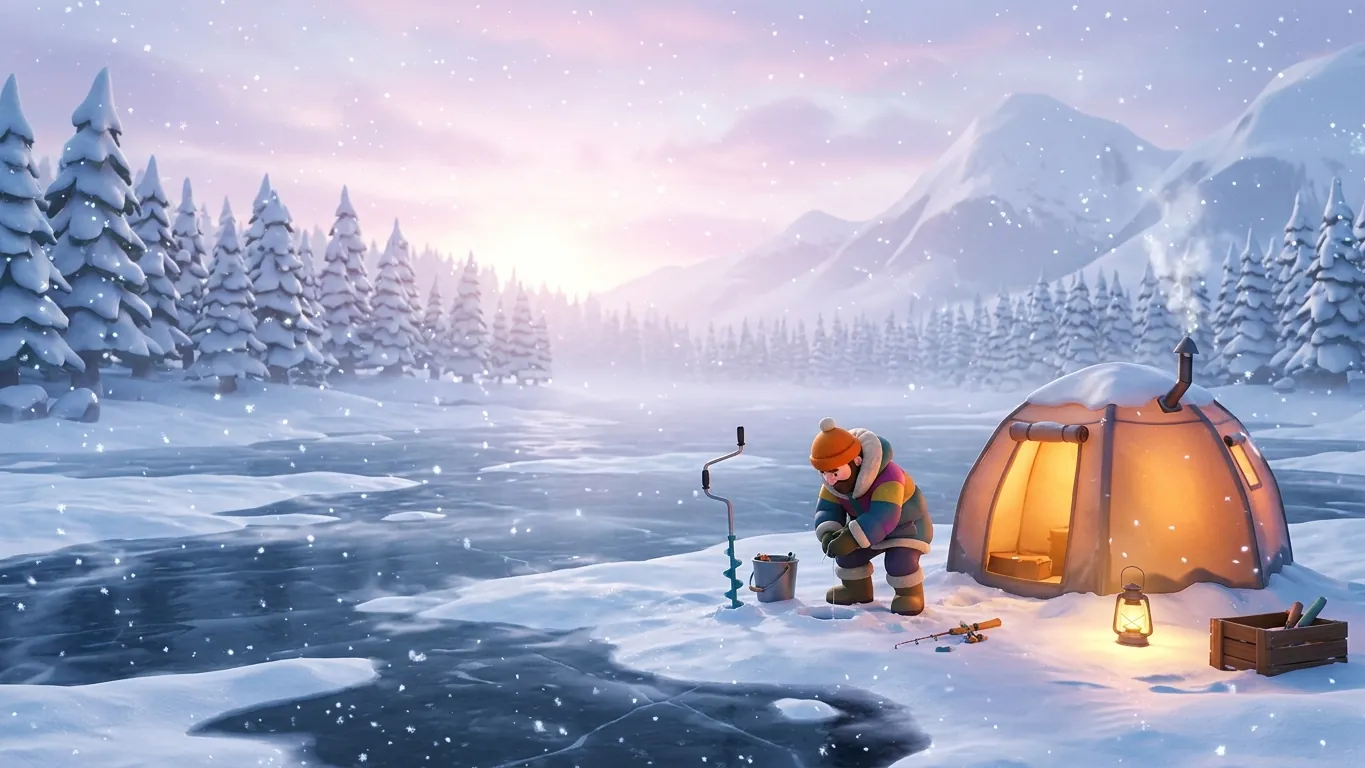 Planning around time and weather in winter fishing games
How in-game time of day, light, snow and wind can shape your session in winter fishing games, with tips for planning around changing conditions.
Read more
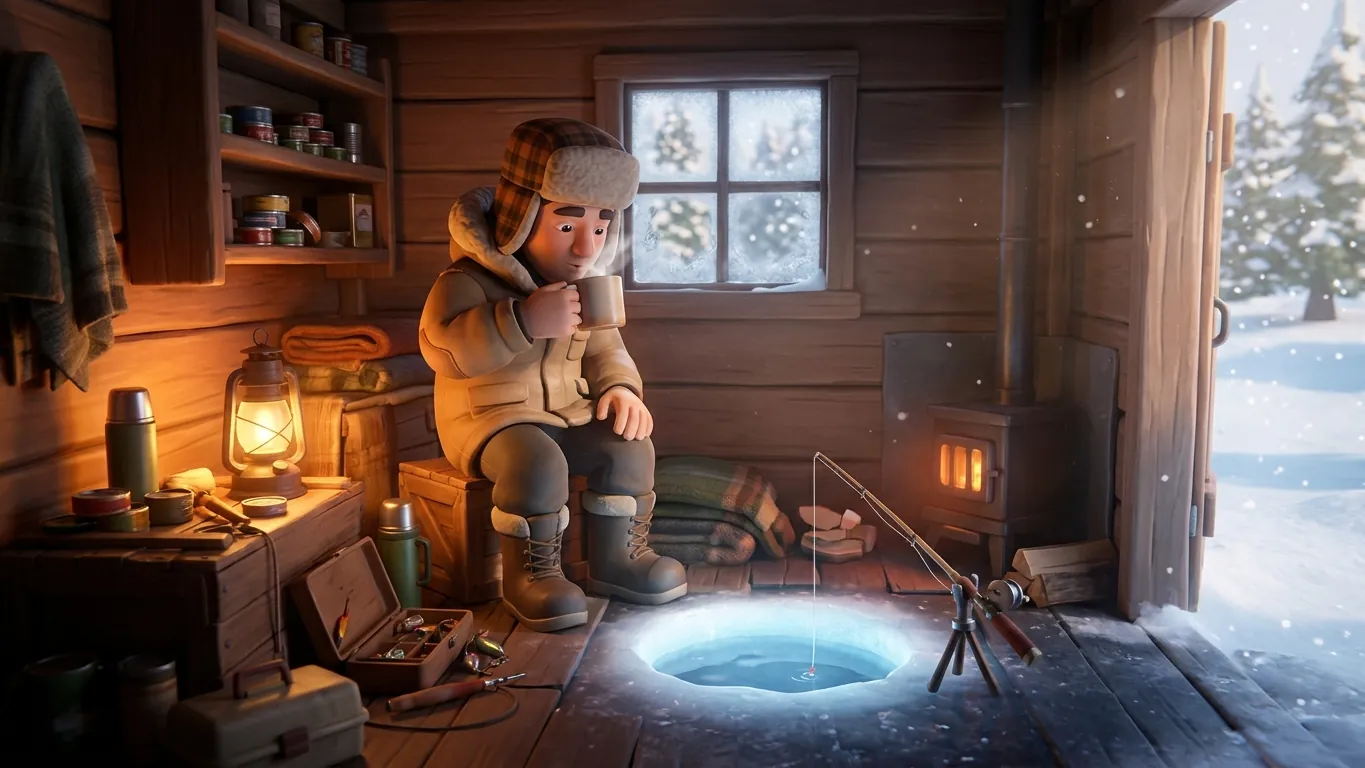 Why winter fishing games feel so relaxing
An opinion piece on why quiet winter fishing games appeal to many players: slow pacing, calm atmosphere, small goals and the satisfaction of patience.
Read more