Small jigs
Tiny weighted hooks, often tipped with bait or soft plastic. Versatile and well suited to panfish like perch and crappie.
Lure choice is one of the biggest decisions you make on the virtual ice. This guide explains common lure types and how to pick one that fits the situation.
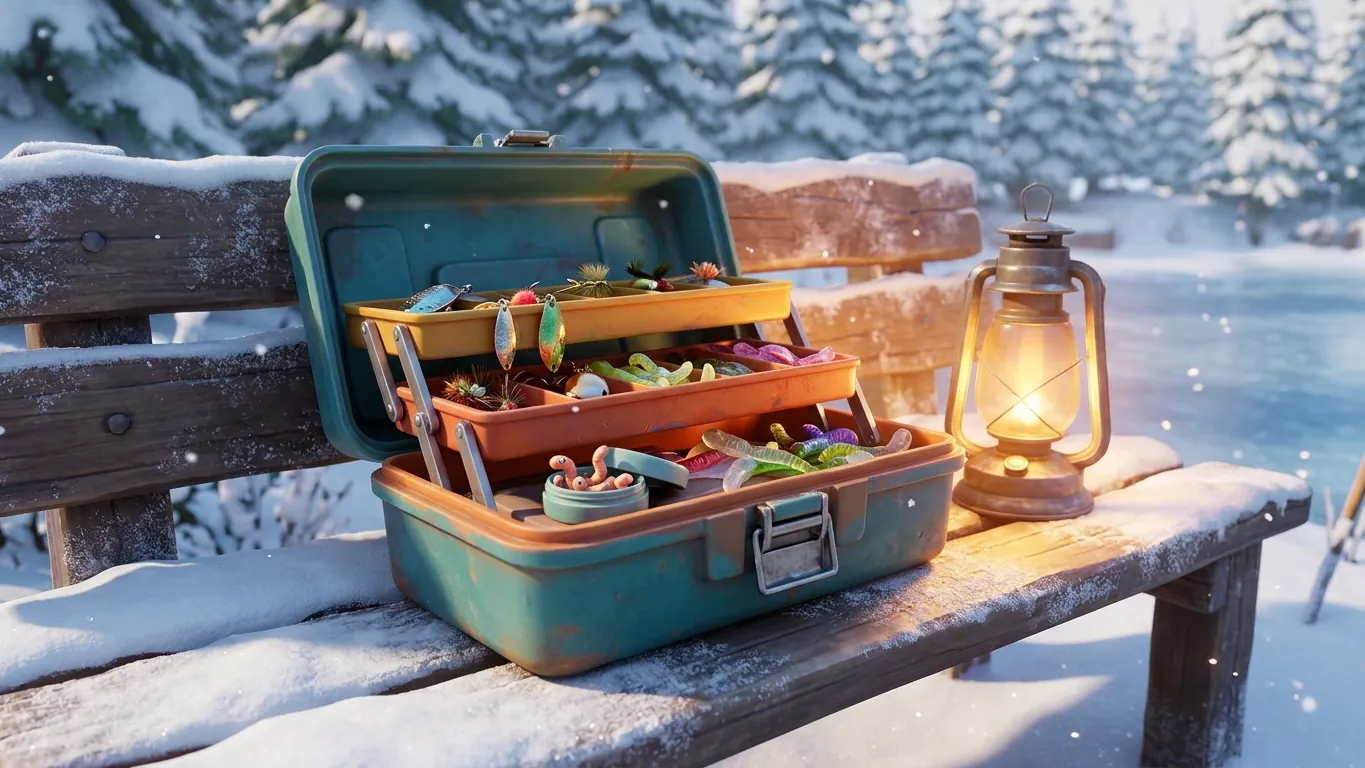
In many winter fishing games, each species has preferences. Some respond to flashy, active lures, while others prefer small, natural-looking baits presented slowly. Water clarity, depth, light level and the fish's current activity can also influence what works, depending on how detailed the game's simulation is.
The good news is that you do not need a huge collection to start. A handful of versatile options will cover most situations. The key is understanding what each lure type is designed to do and switching when the fish are not responding.
These categories appear in many ice fishing games, though names and stats differ.
Tiny weighted hooks, often tipped with bait or soft plastic. Versatile and well suited to panfish like perch and crappie.
Metal lures that flutter and flash as they fall. Useful for attracting attention from a distance and for more aggressive predators.
Worms, larvae or small baitfish. Often effective when fish are cautious and want a subtle, natural presentation.
Flexible lures that imitate small creatures. Many games treat them as durable alternatives to natural bait.
Bigger, noisier options sometimes used for pike or other large predators in games that model them.
A useful starting point is to think about the size of the fish you want and what it might eat. Smaller species are often modeled to prefer smaller offerings, so a tiny jig with a piece of bait is a common choice for panfish. Predators like pike or walleye are often designed to respond to larger, more active lures or baitfish.
Check whether your game provides species information. Many titles include an in-game encyclopedia or journal describing preferred depths, food and active times. Even a short note such as feeds near weeds or prefers low light can help you choose a lure and spot. When no information is provided, experiment with one lure type at a time so you can tell what makes the difference.
Some games let you choose lure colors. A common rule of thumb in fishing games is that natural colors suit clear water and bright conditions, while brighter or glowing colors may stand out better in murky water or low light. Whether your game follows this logic varies, so treat it as a hypothesis to test.
Size matters too. If fish approach but refuse to bite, a smaller lure is often worth trying. If fish seem uninterested from a distance, a larger or flashier lure may help draw them in.
Presentation is just as important as the lure itself. A spoon worked with sharp lifts behaves very differently from the same spoon held almost still. Before switching lures, try changing your rhythm. Sometimes the right lure is already on your line and only the movement needs adjusting.
Many winter fishing games use in-game currency or progression to unlock tackle. It is tempting to buy every new lure, but a more focused approach usually feels more rewarding. Decide which species you enjoy targeting, then look for lures that suit them.
Keep a small rotation: something subtle, something flashy and something in between. When the bite slows, cycle through them before moving to a new spot. This simple habit helps you learn faster, because you can tell whether the issue is the lure, the depth or the location.
 Tips for finding fish under the ice
Practical tips for finding fish in ice fishing games: using depth maps, structure, drop-offs and a systematic hole-hopping approach on frozen lakes.
Read more
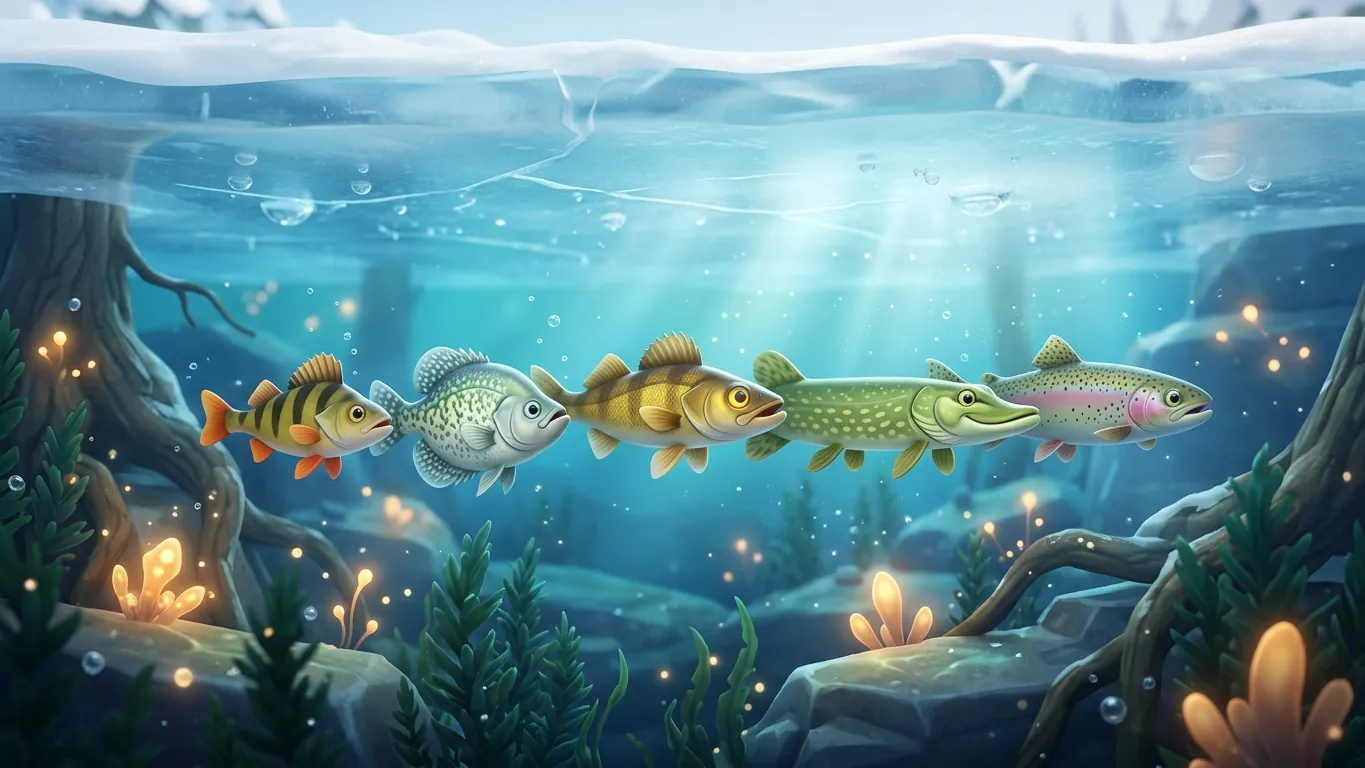 Common winter fish species in fishing games
An overview of cold-water fish often featured in ice fishing games, including perch, crappie, walleye, pike and trout, and how games tend to model them.
Read more
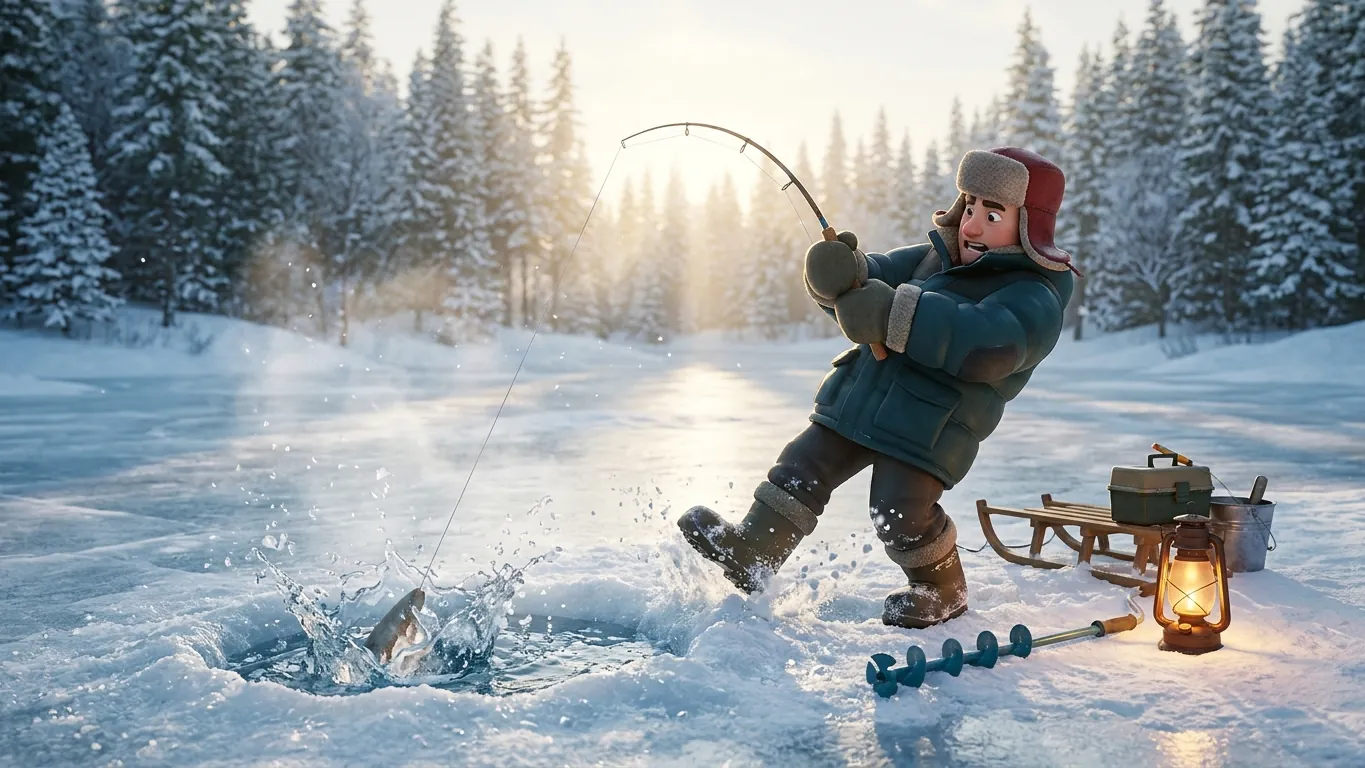 Hook sets and line tension in ice fishing games
Learn how hook sets, drag and line tension usually work in ice fishing games, and get practical tips to land more fish and break fewer lines.
Read more